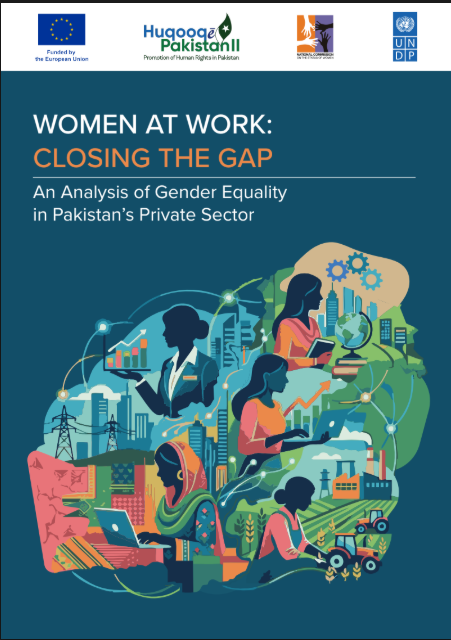
WOMEN AT WORK: CLOSING THE GAP An Analysis of Gender Equality in Pakistan’s Private Sector
the report proposes phased recommendations for government, private sector, and civil society actors...
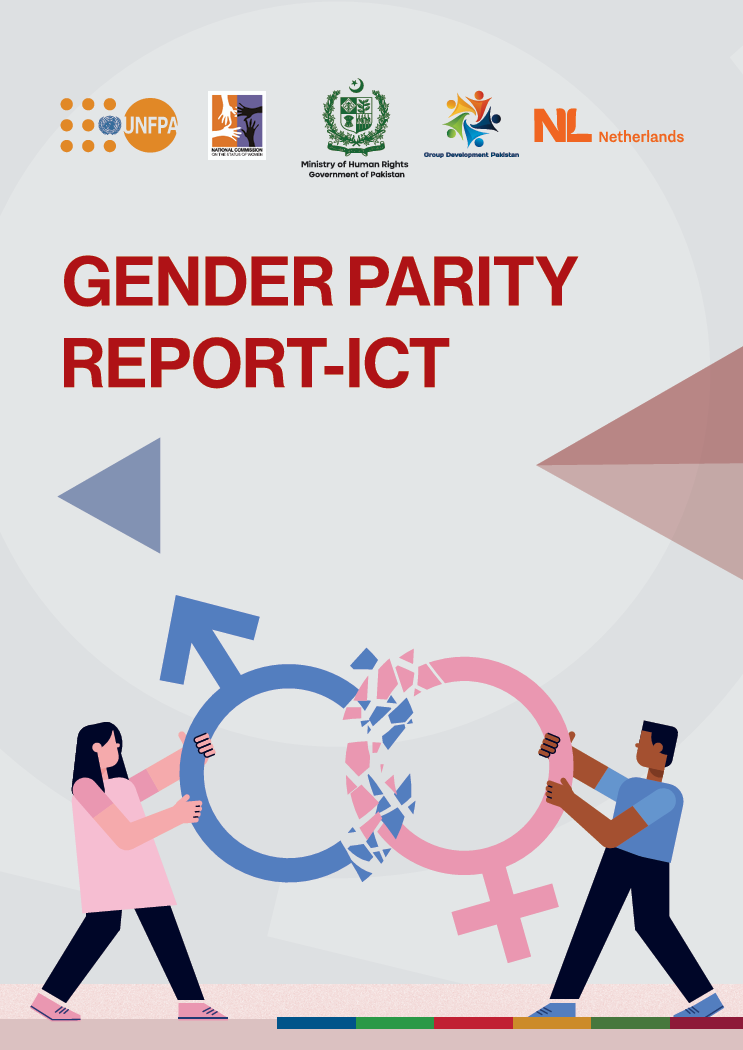
Gender Parity Report(ICT)- 2025
This report presents a comprehensive assessment of gender parity in Islamabad. It focuses on key sectors such as justice, demographics, economy, education, health, and governance. The f indings reveal significant progress in certain areas; however, disparities require urgent attention and reform interventions.
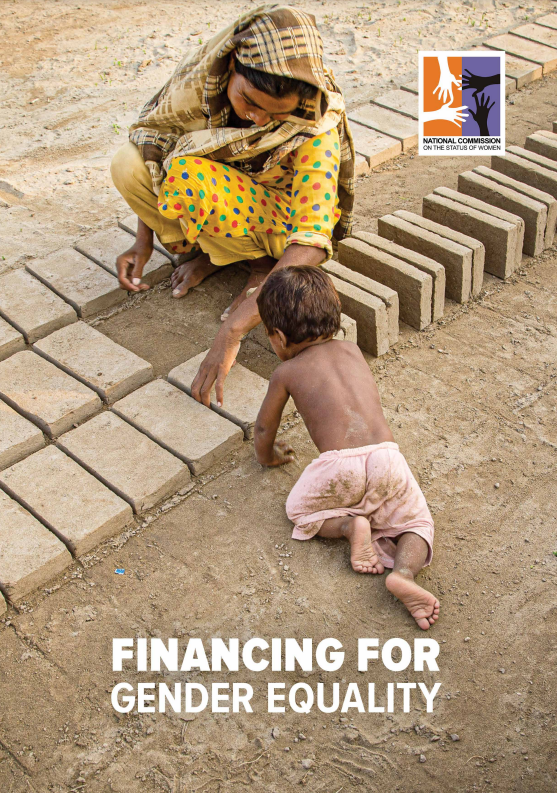
Financing For Gender Equality- 2024
This report presents a comprehensive analysis of gender equality initiatives and challenges in Pakistan, focusing on collaborative strategies, policy recommendations, and resource allocation across various levels of governance and sectors. It highlights the importance of multi-stakeholder collaboration, including government,civil society, and the private sector, in addressing socio-cultural barriers and promoting gender equality.
.png)
Digitalisation and Women in Pakistan- 2023
In recent years, digital technology has transformed how we live and work, providing numerous economic and social development opportunities. However, the unequal distribution of these opportunities between genders, especially in developing countries like Pakistan, has raised concerns about the digital divide. Women in Pakistan, in particular, face significant challenges in accessing and utilising digital technology, which limits their access to education, employment, and economic empowerment. The lack of exposure and ability to understand and navigate digital spaces expose women to technology-facilitated gender-based violence, further exacerbating their vulnerability. This report delves into the gender digital divide in Pakistan and the challenges women face in the digital world. The report identifies the reasons behind the gender gap in access to technology and provides potential solutions to bridge this digital divide. By providing a comprehensive analysis of the issue, this report aims to contribute to ongoing efforts to create a more inclusive and equitable digital environment in Pakistan.
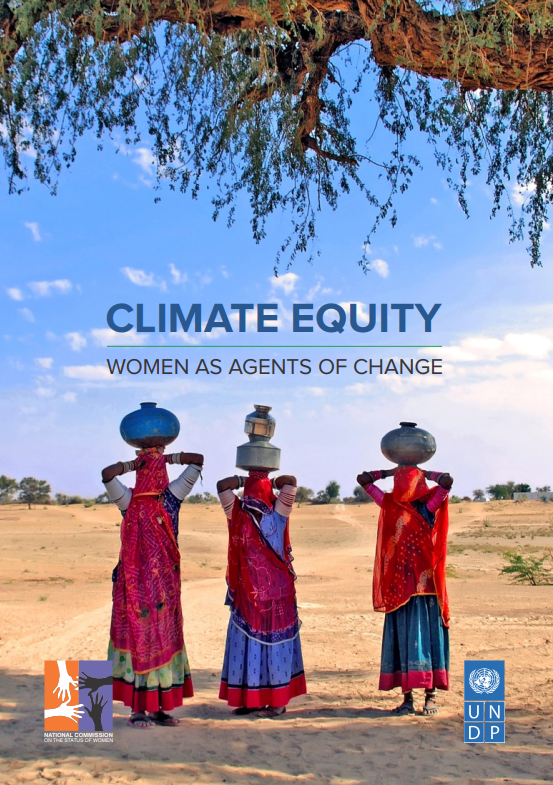
Climate Equity: Women as Agents of Change- 2022
The “Climate Equity: Women as Agents of Change” Report has been jointly produced by the National Commission on Status of Women and UNDP Pakistan. The findings of the report have emerged from an extensive desk review of policies and sectoral practices, followed by key informant interviews and countrywide consultative sessions conducted in all provincial capitals of Pakistan as well as Islamabad, Gilgit-Baltistan, and Pakistan Administered Kashmir. These consultations brought together a diverse group of experts on gender and climate change, including policy practitioners, representatives from the Government, private sector, community-based organizations, academia, and media. The report offers policy prescriptions for enhancing resilience and reducing vulnerability of women who depend on natural environments for livelihoods and sustenance. It gives sector-specific recommendations to make the policies more gender responsive and inclusive to benefit all communities, particularly marginalized cohorts.
Read Full Report

Costing Study on Child Marriage in Pakistan
Child marriage takes away a girl’s right to safe and healthy childhood, quality and complete education that can lead to decent economic opportunities, and social and political empowerment. Pakistan has the 6th highest number of girls married before the age of 18 in the world. Child marriage is prevalent due to several reasons including deeply entrenched traditions and customs, poverty, lack of awareness and/or access to education, and lack of security.

Rural Women in Pakistan Status Report 2018.
Almost two-thirds of Pakistan’s population belongs to rural areas and agriculture is the main labour activity of rural women with approximately 75 percent of women and girls employed in the agriculture sector.
Read Full Report
Gender Perspectives on the National Climate Change Policy.
Climate change affects people differently based on their age, region, sex, gender norms and socioeconomic backgrounds. The National Policy on Climate Change in Pakistan (NCCP) recognizes the vulnerability of women, elderly and disabled persons (particularly in evacuation strategies) and that of rural women in agriculture.
Read Full Report
Standardized Indicators on Violence Against Women in Pakistan
In 2015 the NCSW constituted a multi-stakeholder Technical Working Group (TWG) on Standardised VAW Indicators. This group convened by the Chairperson, National Commission on the Status of Women and comprised 18 members with relevant experience and expertise in any aspects of violence against women (VAW/ GBV).
Read Full Report


Gender Review of Political Framework for Women Political Participation.
This review by NCSW was done with the purpose to assess the discourse on women’s political empowerment and their level of participation in mainstream politics by analyzing the gender gaps in the Election Laws-General Elections 2007-08 and projects for women political empowerment run by the Ministry of Women Development (MoWD) and Gender Reforms Action Program (GRAP).
Read Full Report
Women, Violence and Jirgas
This report is an outcome of the Project "Countering GBV through Research, Data Strengthening and Standardization" convened and implemented by the National Commission on the Status of Women (NCSW) and supported by the Gender Equity Programme of the USAID and the Aurat Foundation.
Read Full Report

Access to Justice for Survivors of Sexual Assault.
This pilot study was conducted to examine positive developments in the investigation and sentencing of cases of rape and sexual offences against women after the amendments in law in 2006 by the Protection of Women (Criminal Law Amendment), Act 2006.
Read Full Report
A Policy Framework for Women's Equal Rights.
The National Commission on the Status of Women (NCSW) initiated a study on women and policy in Pakistan at the beginning of 2010. The purpose of the study was to track discriminatory trends in current policies on women; uncover the flawed underpinnings of gender discriminatory policy approaches and; through a consultative process, recommend alternative approaches for fair and just policy making.
Read Full Report
A Study of Formal and Parallel Legal Systems Prevalent in Pakistan.
Access to justice has been one of the most critical issues facing the citizens of Pakistan in particular women. Due to the various issues facing the judicial system which has resulted in its inefficiency, there has been an increase in a variety of different measures to support the judicial system in the form of additional courts, tribunals etc.
Read Full Report
Impact Assessment Report.
This impact assessment study was carried out in September 2010 to assess significant change within the project area of Public-Private Partnership to end “Honour Crimes” in Pakistan through the implementation of Criminal Law (Amendment) Act 2004 project.
Read Full Report
Review of Formal and Parallel Legal and Illegal Systems
Review of Formal and Parallel Legal and Illegal Systems.
Read Full Report
Extremism, its Impact on Society: Implications for Women.
On 18-19 August 2009, the National Commission on the Status of Women (NCSW) organized at two-day conference in Islamabad on ‘Extremism and its Impact on Society: Implications for Women.’ The themes of the conference were: Symbiotic relations between State and Religion, Patriarchy and Extremism, and Mobilization of Women for Extremist Causes.
Read Full Report
The Impact of Family Laws on the Rights of Divorced Women in Pakistan
This study is an attempt to review the relevant prevailing policy and family laws that have a direct bearing on the rights of divorced women.
Read Full Report
Research Report on Qisas Deyat Law.
Violence against women continues as a deeply embedded customary norm in the name of culture. If moral values are the determinants of a culture, then this certainly raises serious questions about the conscience of the society.
Read Full Report
Good Practices to Counter Violence against Women and Girls.
Good Practices to Counter Violence against Women and Girls..
Read Full Report
Study to Assess Implementation Status of Women Protection Act 2006.
The Women Protection Act, 2006 addresses the most controversial aspects of the Hudood Ordinances, a group of laws that date back to 1979 and General Zia-ul Huq’s rule – those pertaining to adultery and rape, which the new bill categorises as two separate offences.
Read Full Report
Study on Local Bodies System and its Impact on Women.
The Military Government of Pakistan under General Pervez Musharraf announced the Devolution Plan in 2001 under which 33 % quota for women was introduced in local councils and 17 % quota for women in legislative assemblies.
Read Full Report
Recommendations on Qisas and Diyat Law.
Following an extensive of the Qisas and Diyat Law, the NCSW developed and submitted these recommendations to various stakeholders for consideration in related cases.
Read Full Report
Nizam-e-Adl (Inside Out)
This comprehensive study accurately depicts the history and background of the Swat area vis a' vis Nizam-e- Adl, its genesis as part of a peace agreement with the Taliban, its content and implications for women and the views and perceptions of a cross section of society throughout Pakistan (including the citizens of Swat and IDPs).
Read Full Report
Beijing +20 Pakistan Stakeholder Report 1995-2014.
The Pakistan Stakeholder Report spanning two decades since the Beijing Fourth World Conference for Women (1995) was compiled through an exhaustive, inclusive, and comprehensive consultative process with a broad range of stakeholders within and outside government.
Read Full Report
Institutional Strengthening of NCSW Support to Implementation of GRAPs.
This review was done with the purpose to assess the discourse on women’s political empowerment and their level of participation in mainstream politics by analyzing the gender gaps in the Election Laws-General Elections 2007-08 and projects for women political empowerment run by the Ministry of Women Development (MoWD) and Gender Reforms Action Program (GRAP).
Read Full Report
Women, Violence and Jirgas
This report examines literature on the ‘Jirga’, the informal judicial system focusing on the structural and direct forms of violence against women embedded in the practice. It reflects on the evolution and contemporary role of jirgas and its anti women practices, its prevalence and interface with the formal legal system.
Read Full Report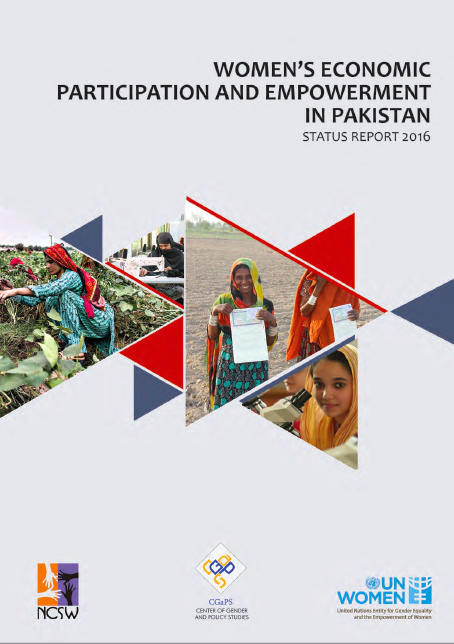
Women's Economic Participation and Empowerment in Pakistan
The 2016 Status Report, in collaboration with The Center of Gender and Policy Studies and UN Women Pakistan, emphasizes the complex and multifaceted concept of women’s economic empowerment and in using national survey data and qualitative studies documents the status of Pakistani women to different dimensions and determinants of economic participation such as human, financial and physical capital, employment statistics and vulnerability in employment, gender wage differentials and poverty.
Read Full Report
Women's Rights of Inheritance and its implementation
Women’s right to inheritance plays a vital role in the socio economic and political empowerment of women folk, but unfortunately women are often denied right to inheritance due to deep-rooted patriarchal system, biased interpretation of divine directives, laws of the land and above all inefficient mechanism for the implementation and enforcement of laws.
Read Full Report