
Consultative Meeting on the Islamabad Capital Territory Child Marriage Restraint Rules, 2025
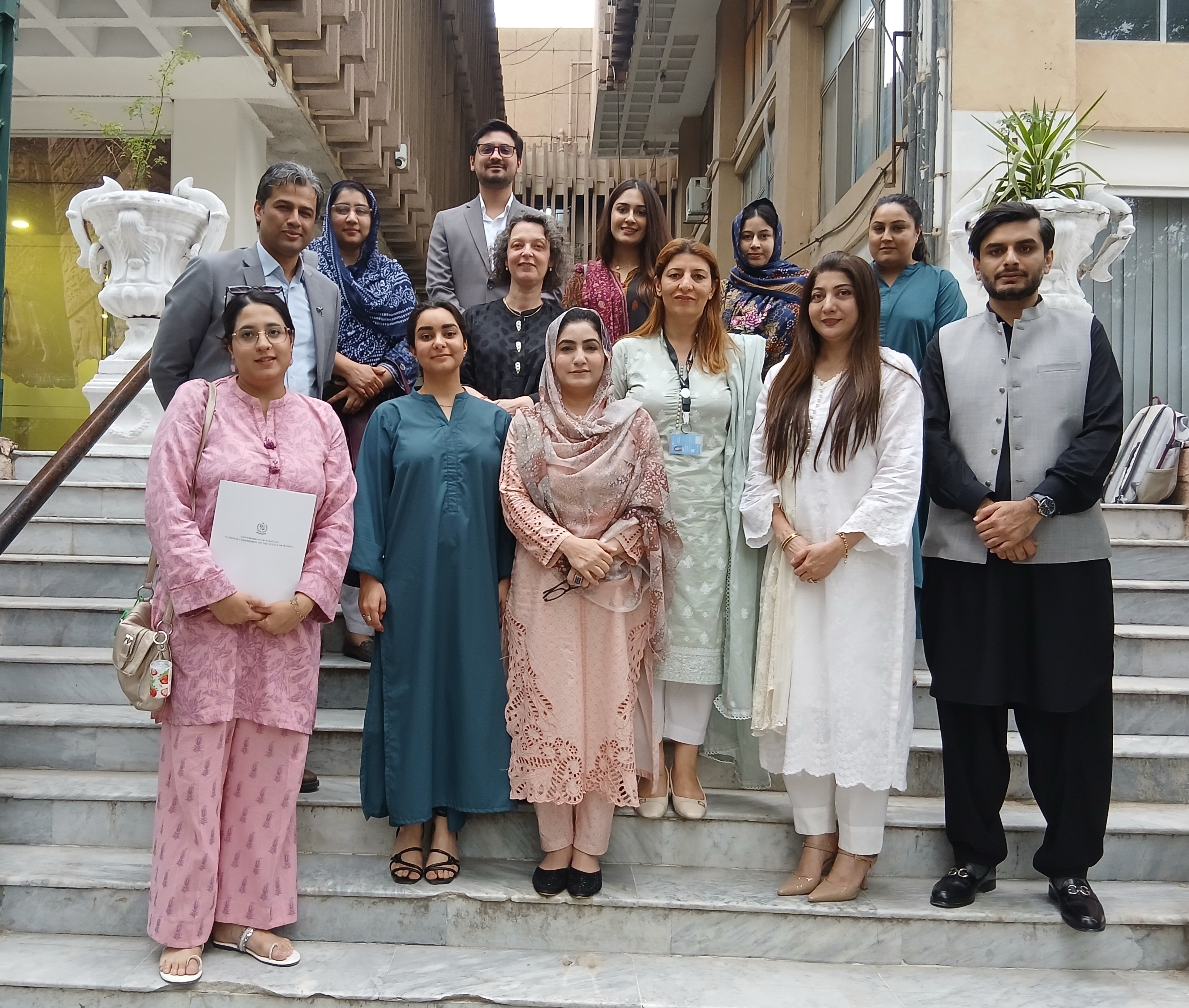
The first multi-stakeholder consultative meeting on the Islamabad Capital Territory Child Marriage Restraint Rules, 2025, was convened at the office of the National Commission on the Status of Women in Islamabad, under the chairpersonship of Interim Chairperson Noureen Bano Lehri. The consultation brought together representatives from key federal ministries, the judiciary, law enforcement agencies, oversight bodies, UN agencies, and civil society organizations to review and strengthen the draft Rules for effective implementation. The draft Rules, developed under the Islamabad Capital Territory Child Marriage Restraint Act, 2025, mark a critical step toward operationalizing a landmark law that establishes 18 as the minimum legal age of marriage for both girls and boys. Discussions focused on strengthening practical enforcement mechanisms, including mandatory age verification through CNICs, expanded complaint mechanisms enabling community reporting, child-sensitive court procedures, and enhanced institutional coordination led by the Ministry of Human Rights. NCSW acknowledges the valuable contributions of Group Development Pakistan and UNFPA Pakistan, who played a prominent role throughout the process, alongside Peace & Justice Network and UNICEF Pakistan. The consultation also benefited from active participation by representatives of the ICT administration, judiciary, police, bar councils, and broader civil society. Participants emphasized that ending child marriage requires more than legislation; it demands strong systems, accountability, and sustained, coordinated action. The consultation further highlighted the importance of linking implementation with victim support services, ensuring gender-sensitive justice processes, and investing in capacity-building across police, prosecution, and the judiciary. A dedicated working group has been established to further refine the draft Rules in consultation with stakeholders. NCSW, in collaboration with its partners, remains committed to advancing a child-centred, enforceable framework that safeguards the protection, dignity, and rights of every child.